

Gaussian Splatting is one of those tech terms that sounds far more complicated than it actually is. When I first heard it, I had to look it up — and once I understood what it was, I couldn't stop thinking about the possibilities. This is genuinely exciting new technology, and it is showing serious promise in replacing other forms of 3D modeling.
Polygons vs. Splats — What's the Difference?
If you pay any attention to 3D modeling, you've probably heard of an OBJ or FBX file, maybe a GLB — all forms of polygonal 3D modeling. These formats are kind of comparable to the JPG, RAW, or PNG formats of regular digital photography that we're all accustomed to. OBJ, FBX, and GLB files consist of triangles that create the shape, then a JPG or PNG image overlaid on top, effectively creating a realistic 3D model. More triangles — or polygons — result in higher detail, which also increases the file size.
Here on LiDARXplorers we use GLB files because they have lower polygon counts and good quality imaging — a great balance of download speed and quality for users.
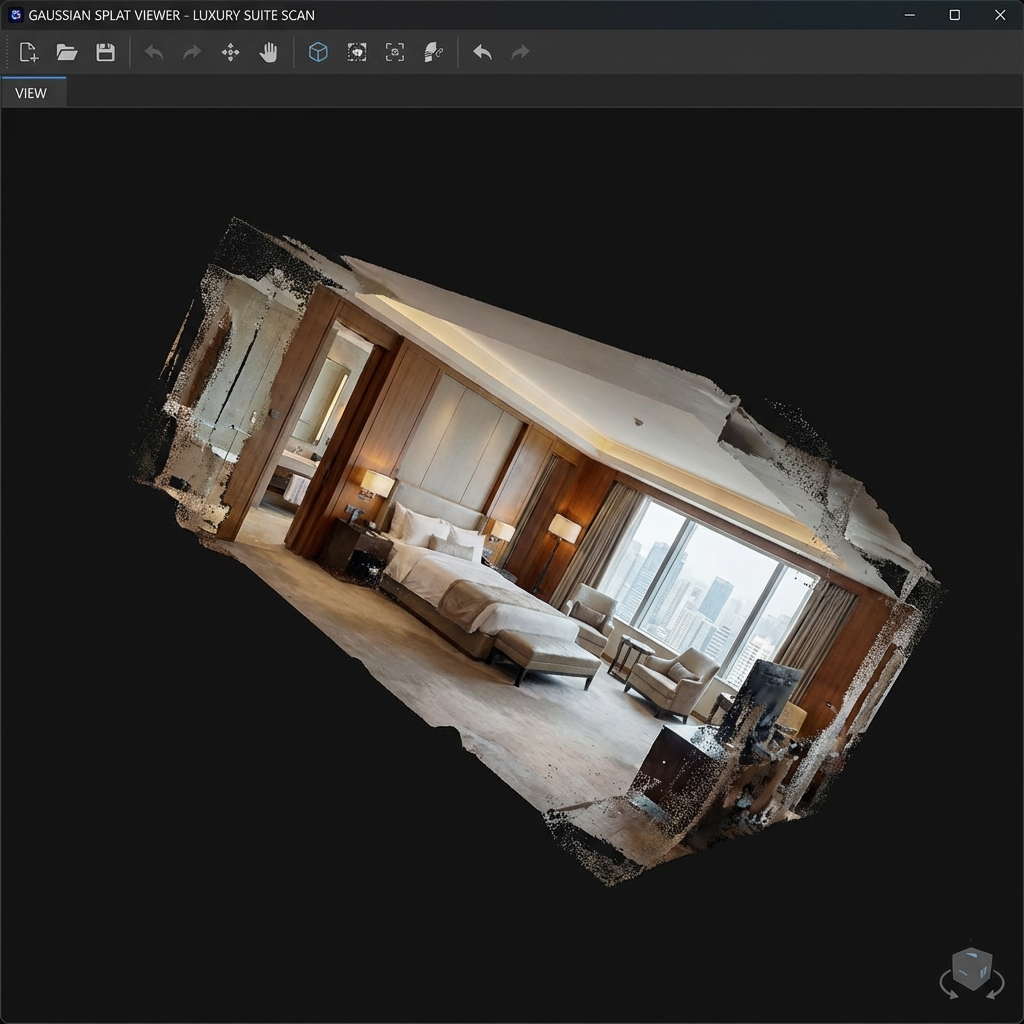
In comparison, a Gaussian splat creates millions of fine, hair-like points that, when put together, create a mosaic that is highly accurate to the original subject. The detail is so high that you can read text on posters and book spines. It's insane how much information gets captured. Gaussian splats also seem to do a better job of representing reflective objects — like a car with shiny paint and glass windows. LiDAR scanning with its infrared lasers, limited by emissivity rules, struggles with those kinds of surfaces. Gaussian splatting doesn't have that problem.
So How Do You Make One?
The very cool — and free to use — Polycam App has added the ability to create Gaussian Splats using its website. With Polycam you can take very still, precise images or video, upload them from your computer to their server, and they'll give you back a very high quality 3D model.
Put your camera on a tripod and use a cake decorating rotating plate to get a smooth, consistent 360° of your subject. The steadier your capture, the better the splat.
There are also other great platforms for Gaussian splatting:
- SuperSplat — free editing software with some truly amazing user-created 3D models to browse for inspiration
- GitHub — open-source splatting tools for those comfortable working in code
The PortalCam: A Game Changer

While watching a recent episode of one of my favorite YouTube channels, Indiana Drones, I saw something that genuinely floored me — he showed off a new tool for Gaussian Splatting, the XGrid PortalCam.
Let me just say: WOW. My first reaction watching this was genuine disbelief — the level of detail this little handheld device captures is truly remarkable.
In the episode, he walks around with this little handheld device and captures everything surrounding him in mind-blowing detail. The PortalCam simultaneously captures high-resolution images and LiDAR data at the same time. For documenting archaeological sites, the possibilities just went through the roof. The device is accurate to 2cm on the LiDAR — not perfect, but pretty awesome for a handheld unit — and the image quality is unmatched by anything I've seen.
This tech is only going to get better from here.
Where Is This All Going?
Gaussian splatting is already changing the way entire industries operate — construction, inspections, the hotel industry, real estate, manufacturing, and so much more. Just imagine going on Booking.com or Cruises.com with your Meta Quest VR headset and walking around the cabin or hotel room before you book. It's coming — and probably sooner than you think.
For archaeology and cultural heritage documentation, the implications are extraordinary. The combination of photorealistic Gaussian splats with centimeter-accurate LiDAR data means we're on the edge of being able to create complete, explorable digital twins of ancient sites — accessible to anyone, anywhere in the world, with a level of fidelity we've never had before.
I'm super excited to see this technology evolve and where it's going to lead us. We have some exciting years ahead.