
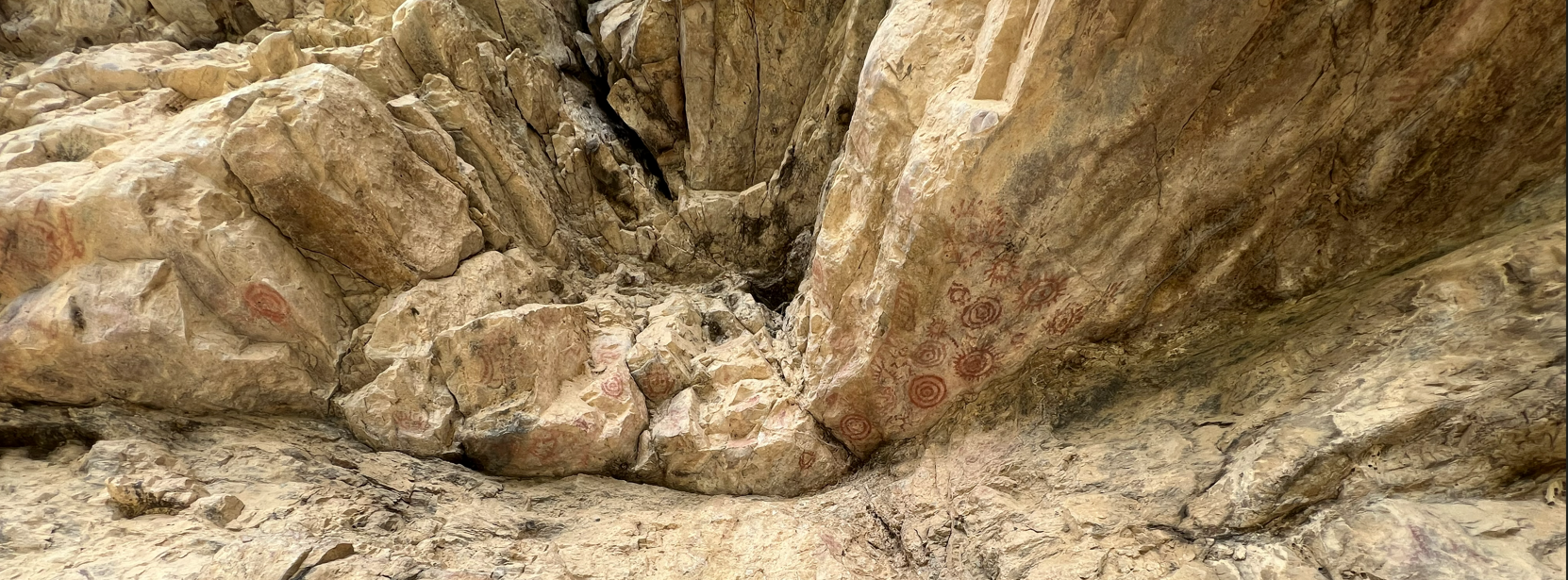
Tucked along a quiet stretch of the Sáchica River in Boyacá, Colombia — just a short drive from the colonial charm of Villa de Leyva — lies one of the most remarkable archaeological sites in the Colombian highlands. Stretching across roughly 40 meters of exposed rock face, the Sáchica pictograms are a vivid window into the ancient cultures that once called these mountains home.
Who Were the Muisca?
To understand the significance of Sáchica, you first need to know about the Muisca — one of the most advanced pre-Columbian civilizations in the Americas. Often mentioned alongside the Aztec, Maya, and Inca, the Muisca people inhabited the high plateaus of the Altiplano Cundiboyacense, the elevated heartland of what is now Boyacá and Cundinamarca departments in central Colombia, at roughly 2,500 meters elevation.
The Muisca were not a single empire but rather a confederation of chiefdoms, organized into two main political entities:
- The Zipa — ruling from Bacatá (present-day Bogotá), controlling the southern territories
- The Zaque — ruling from Hunza (present-day Tunja), governing the northern highlands including the Sáchica region
At the time of Spanish contact in 1537, the Muisca population is estimated at 500,000 to one million people — a thriving civilization with sophisticated agriculture, advanced salt mining at Zipaquirá, and an extensive trade network spanning the Colombian highlands.
The legend of El Dorado — the "City of Gold" that obsessed European explorers for centuries — originated from a real Muisca ritual. At Lake Guatavita, a new Zipa ruler would be covered in gold dust, float out on a raft laden with gold and emerald offerings, and plunge into the sacred waters. The Muisca weren't a city of gold — they were a people of gold, and their metalwork is among the finest in the pre-Columbian Americas.
Their master goldsmithing produced extraordinary works of art, including the famous Balsa Muisca — a miniature gold raft depicting the Lake Guatavita ceremony, now one of the centerpieces of the Museo del Oro in Bogotá.
The Sáchica Pictograms
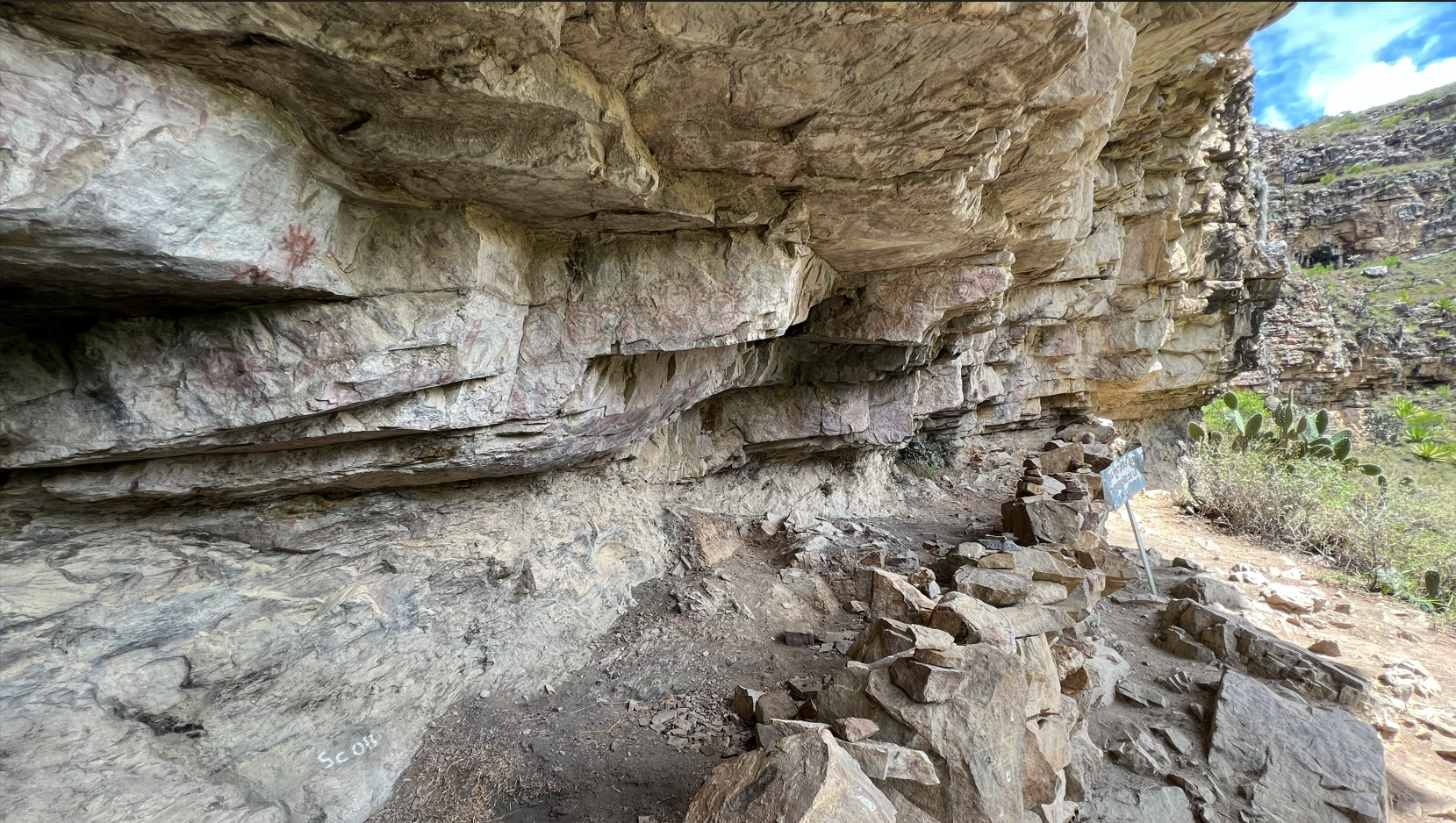
The rock art at Sáchica is not carved into stone — these are pictograms, meaning they were painted directly onto the rock surface using mineral pigments. The paintings stretch across approximately 40 meters of cliff face along the Sáchica River, featuring vivid designs in red and black pigments derived from iron oxides and manganese minerals found in the local geology.
The site was first formally studied by anthropologist Eliécer Silva Célis in 1961, whose groundbreaking documentation revealed the full scope of what had been hiding in plain sight within the rock shelter. His research identified a rich variety of motifs:
- Circular and radiated forms — possibly representing the sun, which held deep spiritual importance
- Human faces — some interpreted as depictions of priests, chiefs, or ancestral figures
- Geometric patterns — spirals, concentric circles, and interconnected lines suggesting cosmological maps
- Plant representations — connecting the art to agricultural knowledge and the land itself
Silva Célis concluded that many of the compositions relate to magic, religion, and celestial observation — a visual language connecting the physical world to the spiritual one. The red pigments in particular, derived from iron-rich minerals, seem to have carried special significance across many South American cultures, often associated with life force and sacred power.
The Sáchica rock art site is located in the municipality of Sáchica, Boyacá, approximately 5 km from Villa de Leyva. Please note: the site is on private property and is currently closed to general tourism. However, permission to visit can sometimes be arranged through local guides based in Villa de Leyva, if available. If you do get the chance to visit, a knowledgeable guide can provide invaluable cultural context and point out details you might otherwise miss.
Scanning the Panel in 3D
As part of the LiDARXplorers project to digitally preserve archaeological sites across Colombia, I had the opportunity to create a high-resolution 3D scan of the Sáchica panel. Using a combination of LiDAR scanning and photogrammetry, the entire rock shelter has been captured with enough detail to examine individual brush strokes in the ancient pigments.
The 3D model below lets you explore the panel as if you were standing right in front of it — orbit around the rock face, zoom into the painted details, and see how the pictograms relate to the natural contours of the stone. Try the 🔴 Rock Art button to isolate just the red painted areas, stripping away the rock surface to reveal the pictograms floating in space.

The Sáchica Panel — Boyacá, Colombia
Red pictograms painted across the cliff face — spirals, faces, and geometric patterns
Launch 3D Viewer →Digital preservation like this matters because these pigments are slowly fading. Exposure to weather and human contact erodes the paintings millimeter by millimeter, year by year. A 3D scan captures the panel exactly as it exists today — a frozen moment in time that future generations can study long after the original has weathered away.
Preserving What Remains
The Muisca civilization endured the catastrophic arrival of Spanish colonization in the 16th century, which brought devastating changes to their culture, language, and way of life. The Muisca language, Muysccubun (part of the Chibchan language family), was gradually suppressed and is no longer spoken as a living language — though it is far from forgotten. Everyday words of Muisca origin survive in modern Colombian Spanish throughout the central highlands: china (girl) and chino (boy) are still used daily in Boyacá and Cundinamarca, along with numerous place names, food terms, and expressions that echo the language of the people who painted these walls. There are also active academic efforts to reconstruct and revitalize Muysccubun.
Yet the rock art endures. The pictograms at Sáchica are part of a much larger network of rock art scattered across Boyacá and Cundinamarca — hundreds of sites, many still undocumented, waiting in the forests and valleys of the Colombian highlands. Resources like RupestreWeb, a South American rock art database, are working to catalog and study these sites before they're lost.
Today, there is a growing movement among Muisca descendants to reclaim their cultural identity. The Great Council of the Muisca People works to preserve traditions, reconnect with ancestral practices, and ensure that the civilization's rich legacy isn't reduced to a paragraph in a history textbook.
For me, standing in front of the Sáchica panel is a humbling experience. These paintings survived centuries of rain, earthquakes, and colonization. Someone stood exactly where I stood, ground minerals into pigment, mixed them with fluids, and placed these marks deliberately — communicating something they considered important enough to make permanent. Our job now is to make sure that message survives.
Sources & Further Reading
- Silva Célis, Eliécer (1961) — Foundational study of the Sáchica pictograms, documenting the site's painted compositions and their cultural significance
- Langebaek, Carl Henrik — Leading scholar on Muisca studies; extensive research on their territorial, political, and social organization
- Museo del Oro, Bogotá — Banco de la República Cultural — primary collection of Muisca goldwork, including the Balsa Muisca
- RupestreWeb — rupestreweb.info — comprehensive South American rock art documentation database
- Colombia.co — Official Colombian cultural heritage documentation